
At 2am last Tuesday, I nearly woke the kids up.
I’d been trying to build a school lunch menu scraper – my first proper attempt at “vibe coding” an actual app. The idea was simple: pull the weekly menu from the school website so I’d stop forgetting it was fish finger Friday until the twins complained about the packed lunch I’d made them.
Twelve attempts. Twelve failures. Every approach I tried involved getting the AI or Python to extract and read the text from the page. None of them worked. The menu was embedded weirdly, the formatting was inconsistent, and I was running out of ideas and patience.
So I stopped. Asked Claude to summarise everything we’d already tried. It did – efficiently, clearly, no judgement about the fact I’d been at this for three hours.
Then I asked a simple question: “What haven’t we tried?”
And it hit me. Every single attempt had been about character recognition. Reading text. What I hadn’t tried was getting the AI to just look at the picture.
We switched to image recognition. Worked first time.
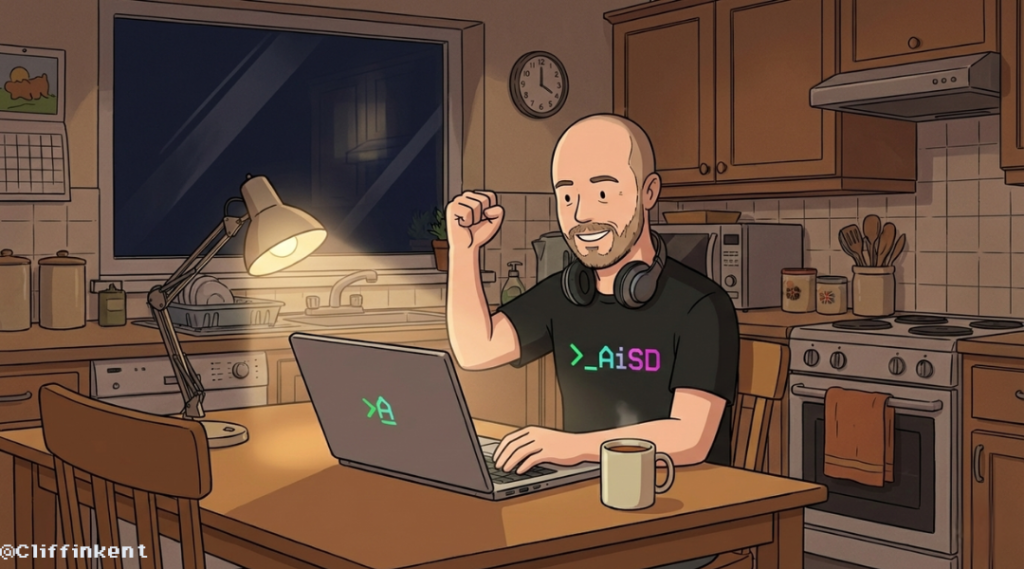
I punched the air so hard I nearly knocked over my tea. Hence the almost-waking-the-kids situation.
Here’s the thing though: Claude didn’t solve the problem. I did. The AI just helped me think clearly enough to spot what I’d been missing.
The entire AI industry is apparently figuring this out too.
You’ve probably seen the headlines. “AI will take your job.” “Robots are coming.” “The machines are learning.” It’s been relentless for two years.
But something’s shifted. The tone is changing.
TechCrunch just ran a piece declaring “2026 will be the year of the humans” – the focus moving from AI that replaces people to AI that augments how they work. Satya Nadella’s saying the same thing: 2026 won’t be remembered for the next big AI invention, but for when AI “becomes truly useful in everyday life.”
Now, the cynical part of me knows why they’re saying this. The fully autonomous AI they promised? It hasn’t materialised. The tech isn’t there yet. So the narrative has to shift.
But the optimistic part of me – the bigger part, if I’m honest – thinks they’re not wrong. Just late.
Parents figured this out ages ago.
You can’t automate a meltdown. No AI is going to convince your seven-year-old that yes, he does need to wear trousers instead of shorts when it’s minus two outside. The bits that matter – the conversations, the judgement calls, the knowing-your-kid moments – those stay human. They have to.
But the admin? The life logistics that drain your energy before the actual parenting even starts? That’s where AI genuinely helps.
Not by doing it for you. By helping you think.
- AI that summarises the school emails so you actually read them – not AI that replies on your behalf.
- AI that helps you spot patterns in the family calendar – not AI that decides what you do.
- AI that drafts a meal plan – but you know your kids won’t touch cauliflower, so you swap it out.
The human stays in the loop. That’s not a limitation. That’s the point.
Here’s something you can try in 15 minutes.
Next time you’re stuck on something – an automation that won’t work, a decision you can’t make, a plan that keeps falling apart – stop asking AI to solve it.
Instead:
- Ask it to summarise what you’ve already tried
- Then ask: “What haven’t I tried?”
You’ll be surprised how often the answer was in your head all along. It just needed organising.
This isn’t a productivity hack. It’s the actual use case. AI as a thinking partner, not a replacement for thinking.
The school lunch menu scraper works now, by the way. First time I’ve ever built something that actually runs. More on that project soon – once I’ve broken it a few more times.
Hit reply and tell me: what’s something AI has helped you think through rather than do for you?
Cliff
Enjoyed this? Check out the Education Hub, or more Articles
Originally posted 2026-02-02 13:40:11.